

Available Document Categories
Annual Financial Reports (10-K equivalent)
Annual Financial Reports (10-K equivalent)
annual-financial-reportWhat is it?The Annual Financial Report is a comprehensive document summarizing a company’s financial performance over the fiscal year. It provides stakeholders with a complete picture of the organization’s profitability, cash flow, and overall financial health.What’s inside?
It typically includes audited financial statements such as the balance sheet, income statement, and cash flow statement, along with management commentary, notes to the accounts, and disclosures on corporate governance.When to expect it?
Companies usually publish their Annual Financial Report once a year, shortly after the fiscal year-end—often within three to six months, depending on regulatory requirements.
Interim Financial Reports (10-Q equivalent)
Interim Financial Reports (10-Q equivalent)
interim-financial-reportWhat is it?The Interim Financial Report provides an update on a company’s financial position between annual reports, covering shorter reporting periods like quarterly or half-year results.What’s inside?
It typically includes complete financial statements with detailed notes, regulatory disclosures, segment analysis, and key metrics. These reports follow standard accounting principles and include detailed tables and footnotes.When to expect it?
Interim reports are generally released midway through the financial year or quarterly, depending on listing regulations and the company’s reporting practices.
Financial Attachments
Financial Attachments
financial-attachmentsWhat is it?Financial Attachments are supporting documents that provides additional financial data and metrics to complement formal financial statements, often tailored for investors and analysts.What’s inside?
They may include breakdowns of segment performance, non-GAAP/IFRS measures, historical comparisons, reconciliations, KPIs (key performance indicators), and other data visualizations.When to expect it?
These appendices are released alongside the main financial documents, such as annual or interim reports, or when additional disclosures are required by regulators or auditors.
Annual Activity Report
Annual Activity Report
annual-activity-reportWhat is it?The Annual Activity Report highlights a company’s operational achievements and key initiatives during the year, focusing on performance beyond just financial results.What’s inside?
It includes summaries of projects, business developments, sustainability efforts, and management commentary on strategy and future outlook, often paired with visuals and performance metrics.When to expect it?
It is typically published once per year, around the same time as the Annual Financial Report, to provide a holistic view of the company’s yearly progress.
Interim Activity Report
Interim Activity Report
interim-activity-reportWhat is it?The Interim Activity Report offers an overview of a company’s key business developments and progress during part of the fiscal year, such as a half-year or quarterly period.What’s inside?
It contains updates on operations, markets, projects, and strategy execution, along with summarized financial highlights that illustrate mid-year performance trends.When to expect it?
This report is usually issued midway through the financial year or quarterly, often together with or shortly before the Interim Financial Report.
Compliance Report
Compliance Report
compliance-reportWhat is it?The Compliance Report details how a company has met legal, regulatory, and internal policy obligations over the fiscal year. It reflects management’s commitment to transparency and sound governance.What’s inside?
It typically includes confirmations of compliance with financial, environmental, and labor regulations; disclosures of any breaches or penalties; summaries of internal audits; and certifications by compliance officers.When to expect it?
Published once a year, often with the Annual or Governance Report, to coincide with year-end filings and corporate governance disclosures.
Historical Performance Summary
Historical Performance Summary
historical-performance-summaryWhat is it?The Historical Performance Summary provides a multi-year view of key financial and operational results, allowing investors to assess long-term business trends.What’s inside?
It features charts and tables comparing revenue, profit, margins, cash flow, returns, and dividends over several years, with brief commentary highlighting major shifts or growth patterns.When to expect it?
Released annually, often as a section of the Annual Report or Investor Presentation, providing context for the latest results.
Earnings Releases (8-K Item 2.02 equivalent)
Earnings Releases (8-K Item 2.02 equivalent)
earnings-releaseWhat it isThe Earnings Release is a brief, high-level summary of a company’s financial results for a given reporting period, intended to quickly inform investors and analysts.What’s inside
It includes key metrics such as revenue, net income, earnings per share (EPS), and operational highlights, along with commentary on performance drivers and sometimes forward-looking statements.When to expect it
Earnings releases are typically published quarterly or semi-annually, coinciding with the company’s scheduled reporting calendar and often just before the earnings call or presentation.
Current Report (8-K equivalent)
Current Report (8-K equivalent)
current-reportWhat is it?A Current Report is an official communication used to disclose significant or unexpected events that occur between regular reporting periods or corporate press releases.What’s inside?
It provides details about material developments such as mergers, leadership changes, legal proceedings, or other events that may affect shareholders or market perception.When to expect it?
As needed, Companies issue Current Reports on an as-needed basis, immediately following the occurrence of a reportable event, to comply with timely disclosure regulations. significant corporate developments occur.
Earnings Presentation
Earnings Presentation
earnings-presentationWhat is it?The Earnings Presentation is a slide deck prepared by management to visually summarize financial and operational performance during an earnings period.What’s inside?
It features charts, tables, and key performance indicators, often including segment performance, market updates, strategic progress, and guidance for the upcoming period.When to expect it?
This presentation is usually released alongside the Earnings Release and used during the company’s quarterly or semi-annual earnings call.
Earnings Call Transcript
Earnings Call Transcript
earnings-call-transcriptWhat is it?The Earnings Call Transcript is the written record of the company’s live conference call with investors and analysts following an earnings announcement.What’s inside?
It includes management’s prepared remarks, financial commentary, and the full Q&A session, providing transparency on how executives addressed investor questions.When to expect it?
The transcript is generally published within a few days after the earnings call, either by the company itself or by financial information services.
Investor Event Presentation
Investor Event Presentation
investor-event-presentationWhat is it?The Investor Event Presentation is a detailed visual briefing shared during special meetings or conferences dedicated to investors, analysts, or media.What’s inside?
It covers business strategy, long-term goals, market opportunities, innovation updates, and financial targets, often designed to reinforce confidence and attract investment.When to expect it?
These presentations are published in connection with scheduled investor events, such as Capital Markets Days, Investor Days, or sector conferences.
Investor Event Transcript
Investor Event Transcript
investor-event-transcriptWhat is it?The Investor Event Transcript provides a verbatim record of discussions, speeches, and Q&A sessions from an investor-focused event.What’s inside?
It captures management presentations, analyst questions, and executive responses, offering context to the visual materials and clarifying strategic messaging.When to expect it?
Transcripts are typically released shortly after the event, often within a few business days, accompanying or following the publication of the event presentation.
Governance Report
Governance Report
governance-reportWhat is it?The Governance Report provides a comprehensive overview of a company’s corporate governance framework, practices, and compliance with relevant codes or regulations.What’s inside?
It describes the structure and functioning of the board of directors, committees, internal controls, risk management, and the company’s approach to ethics and transparency.When to expect it?
It is usually published annually, either as a standalone document or as a section within the Annual Report or Universal Registration Document.
Compensation Report
Compensation Report
compensation-reportWhat is it?The Compensation Report details the company’s remuneration policies and the pay awarded to directors and key executives during the reporting year.What’s inside?
It includes information on fixed and variable pay components, performance criteria, share-based incentives, and alignment of compensation with long-term company performance.When to expect it?
This report is released annually, typically in conjunction with the Annual Report or before the shareholder meeting where compensation matters are subject to approval.
Governance Policies and Charters
Governance Policies and Charters
governance-policiesWhat is it?Governance Policies and Charters are formal documents that define the principles, responsibilities, and operating guidelines of a company’s board and its committees.What’s inside?
They set out rules on board structure, independence, ethics, conflicts of interest, audit practices, and other governance standards that ensure accountability and transparency.When to expect it?
These documents are published or updated as needed, often annually or when governance frameworks evolve.
ESG Report
ESG Report
esg-reportWhat is it?The ESG Report presents a company’s environmental, social, and governance performance and outlines its commitment to responsible and sustainable business practices.What’s inside?
It covers topics such as carbon emissions, energy use, diversity, community impact, ethical governance, and progress toward sustainability targets, often aligned with international reporting standards (e.g., GRI, SASB, TCFD).When to expect it?
This report is usually published annually, either alongside the Annual Report or as a standalone document focused on non-financial performance.
ESG Assessment
ESG Assessment
esg-assessmentWhat is it?An ESG Assessment evaluates a company’s performance across the sustainability pillars to identify strengths, gaps, and risks. It may be conducted internally or externally to inform improvements, ensure compliance, and advance sustainability goals.What’s inside?
It examines key areas within the sustainability pillars and often includes materiality analysis, benchmarking, and risk evaluation to provide a clear view of sustainability performance.When to expect it?
An ESG assessment may be required by local regulations or done voluntarily, often conducted annually or before new projects and constructions to evaluate environmental and social impacts prior to approval.
Initial Offering Prospectus (S-1 equivalent)
Initial Offering Prospectus (S-1 equivalent)
initial-offering-prospectusWhat is it?The Initial Offering Prospectus is a comprehensive disclosure document issued when a company offers its shares to the public for the first time.What’s inside?
It includes detailed information about the company’s business model, financial statements, risk factors, management, use of proceeds, and the terms of the offering.When to expect it?
This document is published prior to the launch of an initial public offering, following regulatory approval, and made available to potential investors during the subscription period.
Follow-on Offering Prospectus (S-3 equivalent)
Follow-on Offering Prospectus (S-3 equivalent)
follow-on-offering-prospectusWhat is it?The Follow-on Offering Prospectus is issued when a company that is already publicly listed decides to issue additional shares to raise more capital.What’s inside?
It outlines the rationale for the new issuance, updated financial data, recent developments, risk disclosures, and details of the offering structure and pricing.When to expect it?
The document is released shortly before or at the time of the follow-on share offering, once the company has obtained the necessary regulatory clearance.
Merger Offering Prospectus (S-4 equivalent)
Merger Offering Prospectus (S-4 equivalent)
merger-offering-prospectusWhat is it?The Merger or Exchange Offering Prospectus is prepared when a company proposes to acquire or merge with another entity by offering its own shares in exchange.What’s inside?
It provides background on the transaction, valuation methods, terms of the exchange, strategic rationale, financial effects, and risk factors related to the merger or acquisition.When to expect it?
This prospectus is issued ahead of the shareholder vote or during the offer period, following regulatory review and approval of the transaction documents.
Tender Offer Disclosure (Schedule TO equivalent)
Tender Offer Disclosure (Schedule TO equivalent)
tender-offer-disclosureWhat is it?The Tender Offer Disclosure is an official statement issued when a company, investor, or group offers to purchase shares of another company—usually to gain control or acquire a significant stake.What’s inside?
It describes the offer terms, price per share, acceptance conditions, offer period, financing arrangements, and strategic intent behind the acquisition.When to expect it?
The document is released at the start of the tender offer process, once regulatory authorities have approved its publication, and remains available throughout the offer period.
Geographical Coverage
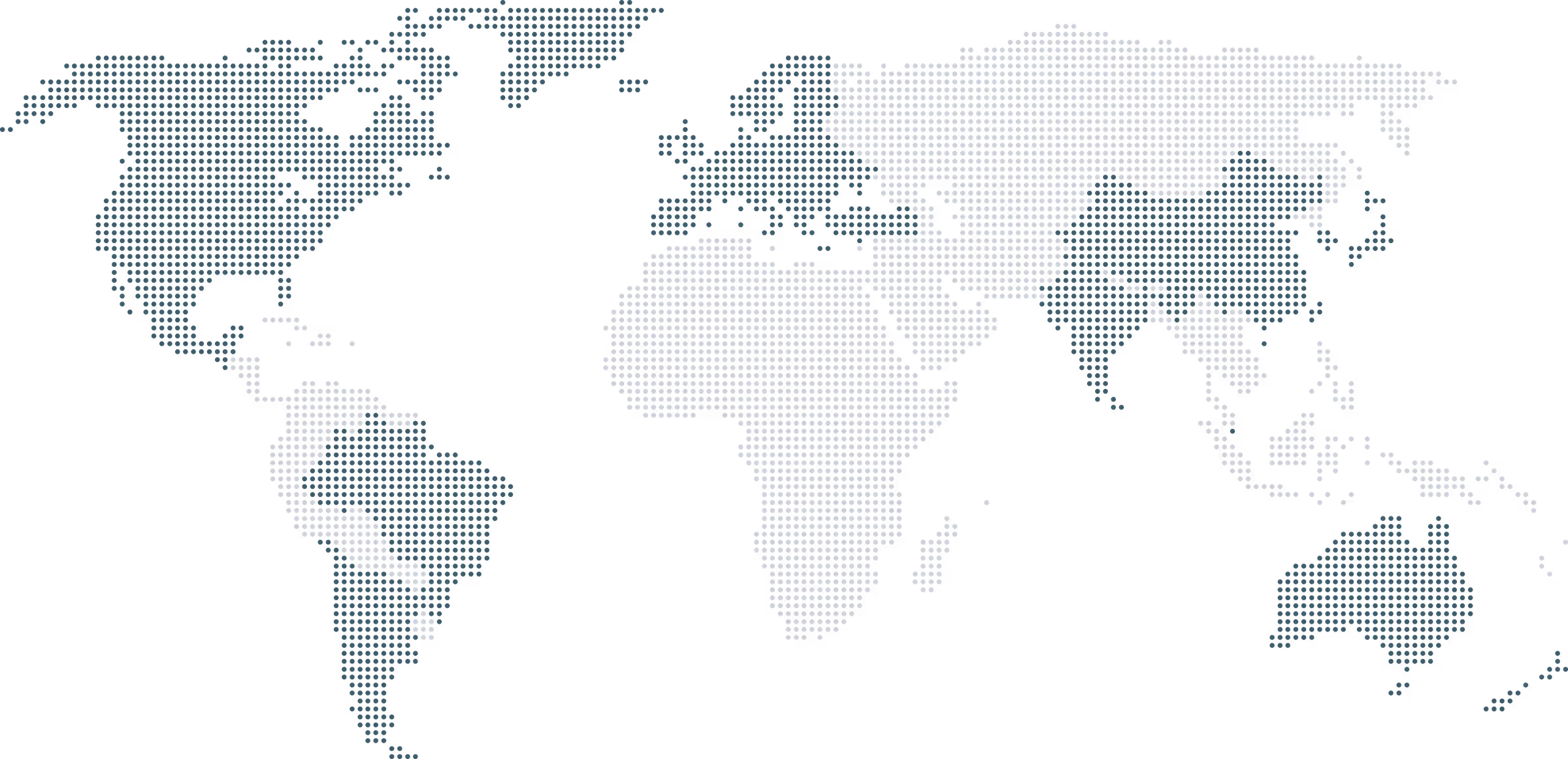
Available Countries (as of Feb 27, 2026)
Australia, Austria, Belgium, Canada, China, Czech Republic, Denmark, Estonia, Finland, France, Germany, Greece, Hong Kong, Hungary, Iceland, Ireland, Isle of Man, Italy, Japan, Jersey, Luxembourg, Netherlands, New Zealand, Norway, Poland, Portugal, Romania, Singapore, South Korea, Spain, Sweden, Switzerland, Taiwan, Türkiye, United Kingdom, United States.Coming in Q2 2026:
Brazil, Mexico, Chile, Argentina, Colombia.
Brazil, Mexico, Chile, Argentina, Colombia.